Matthias Rang, Torsten Arncken, Jan-Dirk Monden (Project Leader)
The three-year project aims to scientifically characterize the qualities of metal-coloured light used in anthroposophical metal colour light therapy through a multimodal research approach. The year 2025 was dedicated primarily to the concrete experimental implementation.
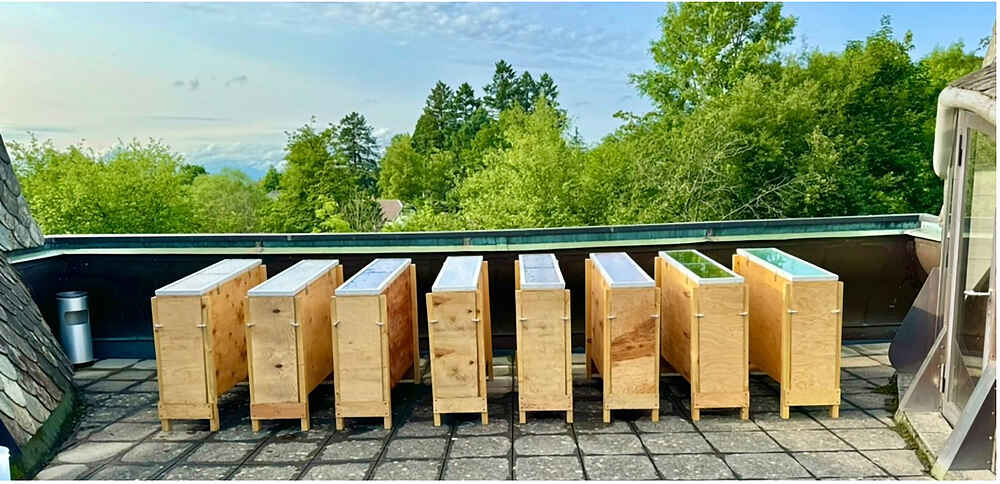
A central component of the research was the work with eight standardized colour-light boxes: three with metal-coloured glasses—iron green, copper blue, and gold red—three with polymer colour films of corresponding colours, and two control boxes. Different plant species were cultivated simultaneously in repetitive cycles under these conditions. For the first time, this made it possible to directly compare the effects of non-metallic polymer colour light (PFL) with colour light produced by metallic substances (MFL) on plant growth. The plants were documented and morphologically evaluated according to defined criteria, incorporating Goetheanist methods.
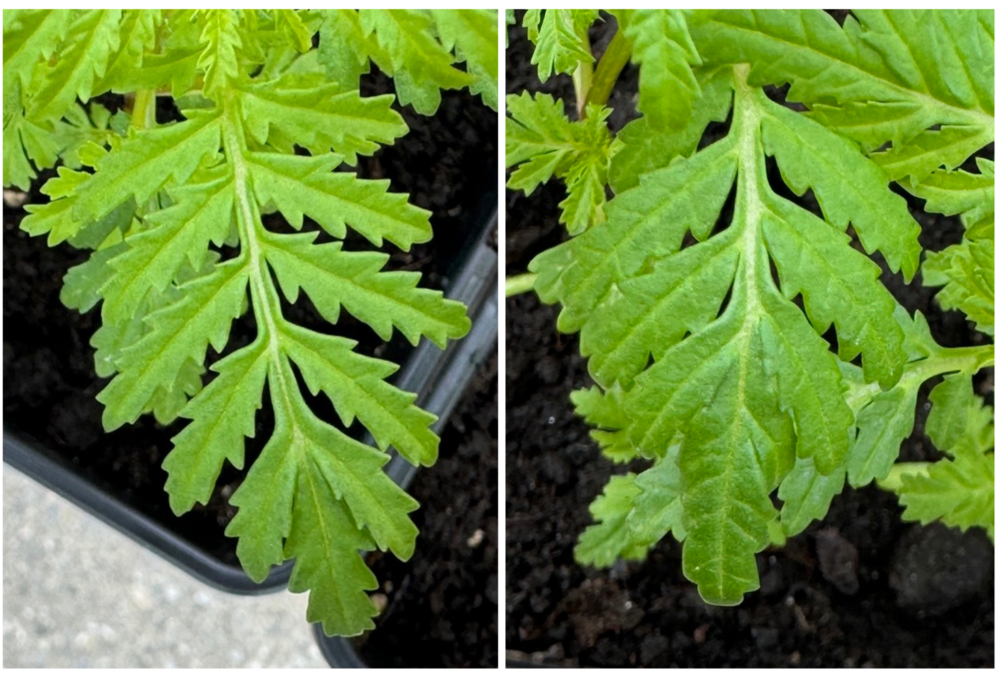
One key result was the occurrence of recognizable differences in the growth of plants cultivated under qualitatively different colour light, for example in Tagetes tenuifolia grown under green iron MFL. Changes in leaf architecture were observed here that did not occur under green PFL. Interesting differences were also observed in Kalanchoe daigremontianum and Lavandula officinalis. The leaves of plants grown under the metal-coloured glasses showed distinct spotting on the underside, whereas the leaves of plants grown under the colour films showed little or only delayed spotting. These findings suggest that metal colour light exerts independent and qualitatively differentiated influences on plant growth processes that go beyond the purely chromatic effect.
In parallel, the analytical foundations were further developed. Measurements of the transmission spectra of the glasses and a substance analysis of the metal colour light glasses using LA-ICP mass spectrometry were carried out, along with investigations using fluorescence excitation spectroscopy (see project: Systemic and Immaterial Influences on Life Processes – Investigations with FES). Using the method of picturing pure sensory perception, we also attempted to gain further insights through the perception of the plants’ fragrance.
Or via Bank Transfer:
| CHF | EUR | |
| Allgemeine Anthroposophische Gesellschaft Postfach, 4143 Dornach/Schweiz Raiffeisenbank Dornach, CH–4143 Dornach BIC: RAIFCH22 IBAN: CH54 8080 8001 1975 4658 2 ⇨ Payment Purpose: KST 1116 | Allgemeine Anthroposophische Gesellschaft Postfach, 4143 Dornach/Schweiz GLS Gemeinschaftsbank eG, DE-44708 Bochum BIC: GENODEM1GLS IBAN: DE53 4306 0967 0000 9881 00 ⇨ Payment Purpose: KST 1116 |