Reto Gabriel & Ruth Richter
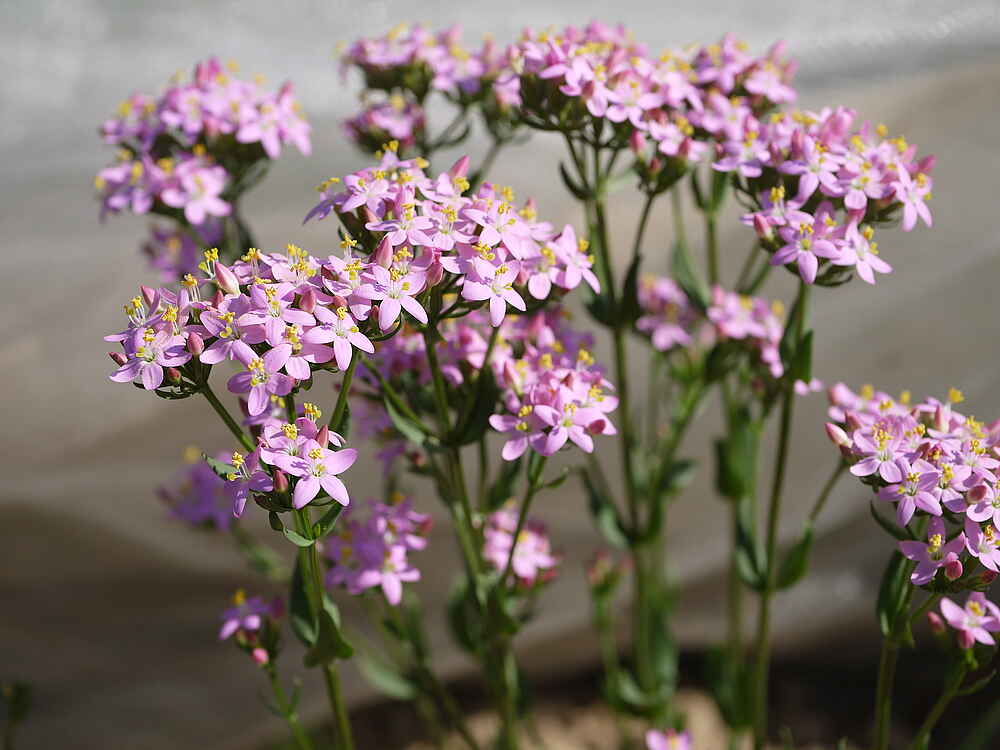
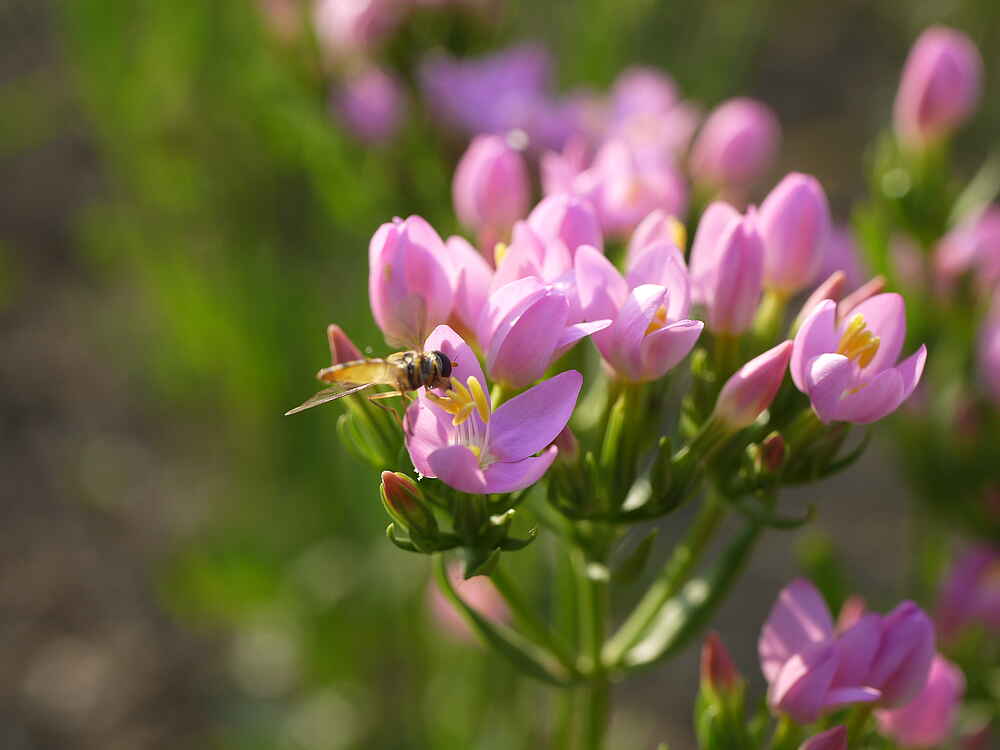
When a wild plant is brought into cultivation and propagated several times through seed, it is not uncommon for it to become susceptible to diseases. Centaury, a small, delicate member of the gentian family with bright pink flowers, is an important bitter herb and is used in many digestive remedies. Although its cultivation presents certain difficulties, it is grown by several natural medicine companies. In years that favour the occurrence of fungi, harvests at most locations are poor. The task therefore arises of breeding a fungus-tolerant and homogeneous centaury variety suitable for ecologically sustainable cultivation systems.
First, we collect all available accessions and observe how they behave under identical cultivation conditions. Is there already an ideal type that resists fungal infection with vitality and abundant flowering? Already in the first year of cultivation clear differences became visible: some accessions proved vigorous, while others declined strongly. From three accessions, the ten most vital plants were isolated in order to avoid cross-pollination with weaker plants.
For the next phase of the project, two types with different growth heights were cultivated, together with a particularly susceptible accession as a control. In the following year, exceptionally humid and mild weather conditions prevailed, leading to particularly high fungal pressure. Winter losses highlighted the differences: while the low-growing type lost only about 12 % of the plants, the taller type declined sharply with losses of more than 70 %. The control suffered a total failure that year. Of the original 120 plants per accession, only a few remained. Remarkably, the few surviving plants of the first type appeared more vigorous, branched more bushily, and flowered earlier. Thanks to their robustness, seed could be harvested and provided an important basis for selection. High losses due to fungal pressure were not an obstacle but rather helpful, as they enabled a strict selection.
At this point at least two research questions arise. Can centaury sufficiently self-pollinate if it is isolated during the flowering period without pollinators having access? There are studies examining the transition to self-fertilisation under conditions of pollinator scarcity – centaury showed this ability, although with varying results. In our case, a comparison between young plants from isolated mother plants and those from openly pollinated plants showed greater homogeneity in the population derived from isolated seed, but with lower vitality. For this reason, we will tend to avoid isolating individual plants in the future. The isolation of an entire bed using hoverflies for pollination still needs to be tested.
The second question asks whether the fungal diseases that lead to premature wilting might already be associated with the seeds. To investigate this, seed treated with steam to reduce spore contamination was sown alongside untreated seed, and the young plants were cultivated under identical conditions.
In the following experimental year, weather conditions were the opposite: after a dry period in spring came phases of rain, yet the summer itself was extremely hot and dry. As a result, fungal pressure was so low that the key questions concerning fungal tolerance could not be answered. Neither the effect of the steam treatment of the seed nor the success of the preceding selection could be clearly evaluated. Nevertheless, important observations were made. We focused on positive and negative selection within the population: weak and infected plants were removed, while vigorous plants were deliberately selected for further breeding. Interestingly, some individuals showed a tendency toward an annual life cycle, which opens a new possible breeding goal, as annual plants could avoid disease pressure in spring.
Plant breeding means, through many years of working with a species, inwardly experiencing a living picture of the possibilities and limits of this particular plant type. Only with such a flexible inner picture can the breeder recognise which characteristics a future plant should possess – and, within the diversity of the field, select the “right” one.
Or via Bank Transfer:
| CHF | EUR | |
| Allgemeine Anthroposophische Gesellschaft Postfach, 4143 Dornach/Schweiz Raiffeisenbank Dornach, CH–4143 Dornach BIC: RAIFCH22 IBAN: CH54 8080 8001 1975 4658 2 ⇨ Payment Purpose: KST 1124 | Allgemeine Anthroposophische Gesellschaft Postfach, 4143 Dornach/Schweiz GLS Gemeinschaftsbank eG, DE-44708 Bochum BIC: GENODEM1GLS IBAN: DE53 4306 0967 0000 9881 00 ⇨ Payment Purpose: KST 1124 |