Vesna Forštnerič Lesjak
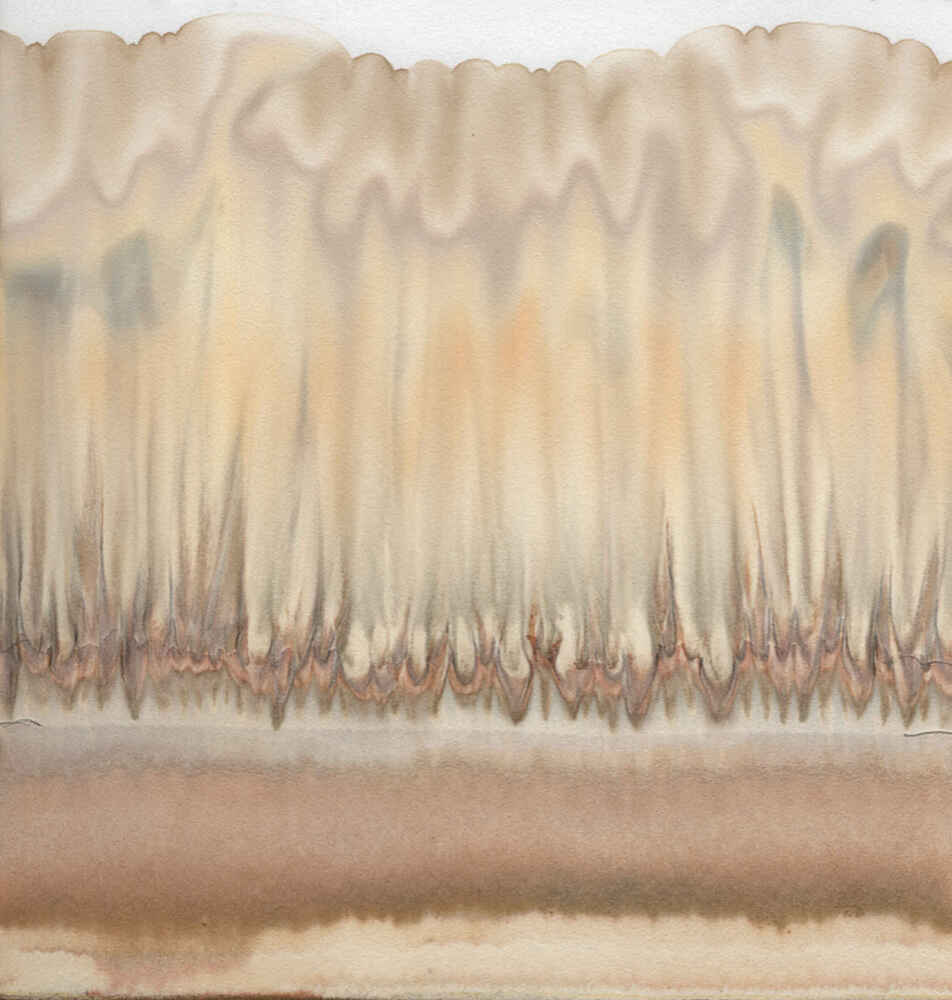
This comprehensive project began in July 2024. Five Artemisia species (A. annua, A. absinthium, A. abrotanum, A. vulgaris, and A. verlotiorum) have already been closely observed twice over the course of the year in the leaf region using the rising picture method (2024 and 2025). Experiments were conducted with 25 % and 50 % concentrations of the fresh extract and with at least three parallels under defined laboratory conditions according to the WALA method. This work yielded important insights into the qualitative development of these species. In parallel, additional experiments were carried out in 2025 using standardized dry residue of the fresh extracts in order to exclude this factor as a cause of differences between the rising pictures over the course of the year. The experiments are accompanied by intensive discussions within the scientific advisory board (Prof. Dr. Stephan Baumgartner, Dr. Claudia Scherr, Dr. Paul Doesburg, Ruth Mandera, and Greta Guglielmetti).
In May 2025, the annual meeting of the Working Group for Image-Forming Methods was held in Dornach. This project was presented there for the first time and discussed more broadly. Within the framework of this project, samples from Artemisia annua L. were also prepared in summer 2024 for a ring trial and distributed to various laboratories, institutes, and individuals. At the meeting in May 2025, results from different laboratories using various image-forming methods were evaluated and exchanged. An entire issue of Elemente der Naturwissenschaft will be dedicated to image-forming methods in 2026 as an outcome of this meeting, featuring several articles.
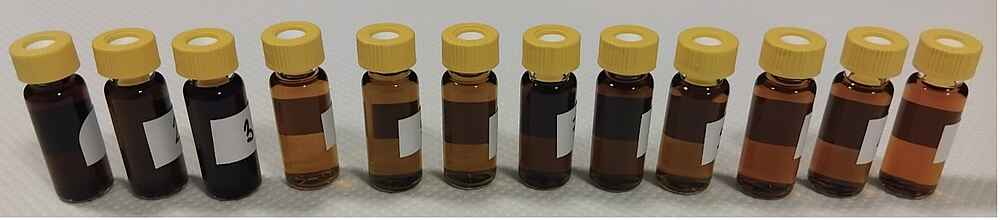
The first pharmaceutical samples (hydroethanolic macerates, digestives, and decoctions) were also produced in 2025 from Artemisia annua L. (annual mugwort) and Artemisia absinthium L. (wormwood), both in the vegetative and generative phases, according to the Ph. Eur. regulations (a total of 12 samples).
How do the original qualities of fresh plants change over the course of the year through pharmaceutical heat processes in the liquid phase, such as those also used in anthroposophic pharmacy? In all cases, the leaves of these Artemisia species are processed from fresh starting material—with the same ethanol concentration and the same ratio of substance to solvent; only the temperature and the process itself are varied. The extracts obtained are qualitatively evaluated using the rising picture method, and additional substance analyses are carried out. Prof. Dr. Potterat from the University of Basel (Division of Pharmaceutical Biology, Faculty of Pharmaceutical Sciences) has already analyzed the first samples using the HPLC-UV-MS method.
The HPLC-UV chromatograms primarily showed polyphenols, particularly flavonoids and caffeic acid derivatives. The initial results are highly differentiated and reveal both similarities and smaller differences in the substance profiles between the three pharmaceutical processes. Changes in the substance profile between the vegetative and generative phases are also clearly visible. The next step will be to produce and evaluate MS and CAD (Charged Aerosol Detector) chromatograms, which are expected to reveal additional substances.
In the coming year, preparations will begin for a further 12 samples from the two remaining Artemisia species: A. vulgaris L. (common mugwort) and A. abrotanum L. (southernwood).
For the evaluation of the rising pictures, a professional computer program was installed this year that calibrates and standardizes the colours in the rising pictures. We are now attempting to gradually define criteria for an intersubjective evaluation of the rising pictures and to present the results in spider plots in order to enable publication in scientific journals.
We would like to express our sincere thanks to the Software AG Foundation, the Foundation for Integrative Medicine and Pharmacy, the Hauschka Foundation, and AGiD for their support of this research to date.
Or via Bank Transfer:
| CHF | EUR | |
| Allgemeine Anthroposophische Gesellschaft Postfach, 4143 Dornach/Schweiz Raiffeisenbank Dornach, CH–4143 Dornach BIC: RAIFCH22 IBAN: CH54 8080 8001 1975 4658 2 ⇨ Payment Purpose: KST 1125 | Allgemeine Anthroposophische Gesellschaft Postfach, 4143 Dornach/Schweiz GLS Gemeinschaftsbank eG, DE-44708 Bochum BIC: GENODEM1GLS IBAN: DE53 4306 0967 0000 9881 00 ⇨ Payment Purpose: KST 1125 |